Quick verdict: Every review starts with the creative job a buyer needs done, then checks whether the product improves output, lowers friction, and makes its costs and limits clear.
Design Overflow exists for creative buyers who need practical evidence before choosing software, studio tools, fonts, monitors, templates, approval systems, or workflow services. The site is an affiliate review site, but the editorial method keeps the commercial layer visible and separate from the verdict.
This is an editorial desk review based on public product pages, support documentation, pricing or license pages where available, and design-production workflow analysis. We do not claim private lab access, undisclosed vendor briefings, or direct hands-on review unless a page says so explicitly. Readers can review About Design Overflow and our editorial policy before relying on any recommendation.
Commercial link: Check current Adobe Stock licensing context. Design Overflow may earn a commission if a partner credits this link, but the recommendation above is based on fit, license clarity, support risk, and source evidence.
Quick Verdict Matrix
| Option | Best fit | Main strength | Watch before buying |
|---|---|---|---|
| Fit | Readers with a specific creative job | Clarifies who should buy and who should skip | Weak if the article treats every product as universal |
| Signal | Claims that need evidence | Uses official docs, pricing, licensing, and support sources | Weak when marketing copy is treated as proof |
| Cost | Budget owners and renewal reviewers | Surfaces seats, renewals, license limits, and migration risk | Weak when the first-year price dominates the verdict |
| Output | Creative teams that need better finished work | Connects the product to production quality | Weak when a product only looks good in screenshots |
| Disclosure | Readers evaluating affiliate independence | Keeps commercial relationships visible | Weak when the revenue model is hidden |
The Four-Part Review Frame
Every review is organized around fit, signal, cost, and output. Fit asks who the product is for. Signal asks what evidence supports the claim. Cost asks what the buyer will actually pay after seats, renewals, support, and licenses. Output asks whether the product improves creative work rather than only looking impressive in a launch page.
Fit: start with the job, not the category
Fit comes first because feature lists are easy to inflate. A tool can be excellent and still wrong for a freelancer, a small agency, a SaaS design team, or a brand studio. The article should name the buyer, the job, and the reason a different reader may be better served elsewhere.
Signal: separate product proof from merchant positioning
Signal means we check the source behind the claim. Official product pages explain positioning, help centers clarify feature behavior, pricing pages reveal cost structure, and license terms matter for fonts, stock, templates, and AI assets. Merchant claims are useful inputs, not final proof.

Cost: look beyond sticker price
Cost is not only the checkout number. It includes paid seats for clients, renewal jumps, commercial license limits, support tiers, and the time spent migrating away from a tool. A cheap product can be expensive when it creates rights uncertainty or rework.
Output: measure effect on finished creative work
Output asks whether the product helps a team ship a clearer interface, more consistent system, cleaner approval loop, better calibrated image, or safer asset decision. A recommendation should reduce production risk, not simply reward attractive marketing.
Disclosure: make the business model auditable
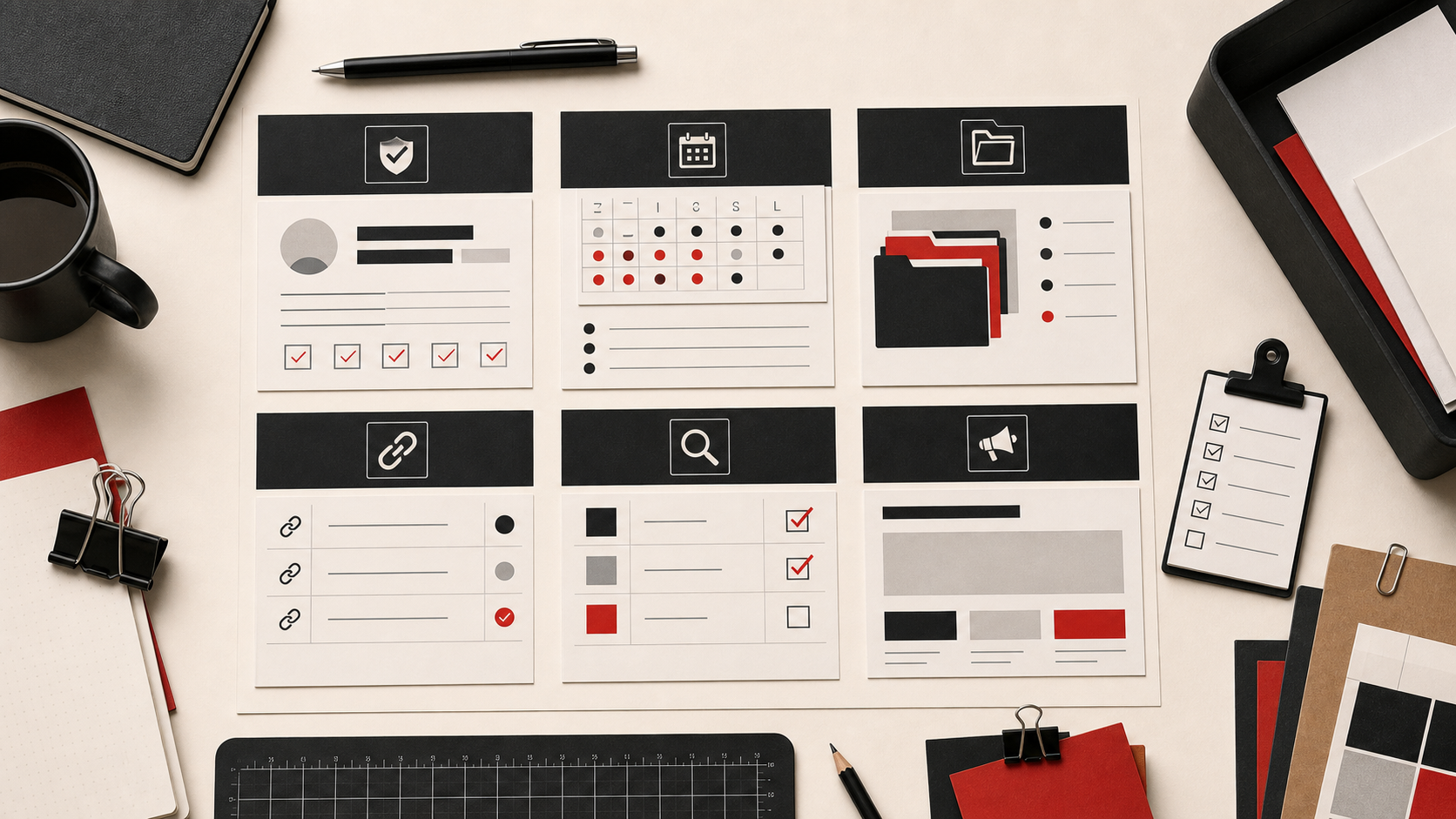
Affiliate links may appear when they help readers act on a recommendation, but they do not decide ranking or coverage. The FTC guidance around endorsements is one reason disclosures must be visible and understandable.
Buyer Scenarios
Use the shortlist against a real production scenario before buying. A solo designer, a three-person studio, an in-house creative operations team, and a client-side brand manager do not have the same risk. The safest decision names the current project, the person responsible for adoption, the budget owner, the license or support risk, and the exit path if the product stops fitting. If the team cannot name those five things, the product may still be interesting, but the buying decision is early.
For client work, document the source, account owner, license or renewal rule, and files that need to remain accessible after the project closes. That handoff discipline is especially important for fonts, stock assets, templates, hardware warranties, and systems that depend on paid seats. A tool that looks inexpensive at checkout can become expensive when the next designer cannot access the files, when a license does not cover the final deliverable, or when a reviewer approves the wrong version.
How to Choose Without Overbuying
Use Design Overflow as a decision filter, not a substitute for procurement, legal review, accessibility review, or direct product trials. Open the official source links, verify current terms, and run a live workflow before a purchase affects client delivery.
The practical rule is simple: buy for the bottleneck you can name, not for a feature list you might use later. If the bottleneck is version confusion, fix review status. If the bottleneck is license uncertainty, fix rights documentation. If the bottleneck is color trust, fix the monitor and calibration process. If the bottleneck is production speed, use templates as a starting structure rather than a finished brand decision.
Internal Reading
For related decisions, read design system rankings, approval comparison, software deal guide, brand review guide. The goal is to connect each purchase to the broader studio system rather than make isolated tool decisions.
Sources Checked
- FTC Endorsement Guides FAQ
- FTC advertisement endorsements topic page
- Google Search Central helpful content
- Adobe Fonts licensing
- Adobe Stock license terms
FAQ
Does Design Overflow accept paid placement?
Design Overflow may include commercial links or paid opportunities when they are clearly disclosed, but paid placement does not buy ranking, coverage, or favorable verdicts. A product still has to fit the article intent, show useful evidence, and survive the same review questions around license clarity, support, workflow fit, and buyer risk.
Do reviews claim direct use of every product?
Only when an article explicitly says direct use occurred. Desk reviews rely on public evidence such as official product pages, support documentation, pricing pages, license terms, and credible third-party context. The article should label that scope so readers know whether they are reading a hands-on review, a desk review, or a comparison built from public evidence.
Why link to official pages?
Official pages are primary evidence for features, pricing, licensing, compatibility, support, and specifications. They also help readers verify whether a claim has changed since publication. Third-party reviews and community discussions can add useful context, but the official page is where purchase terms, warranty rules, and current product details usually live.
What should readers verify before purchasing?
Readers should verify current pricing, license terms, refund policy, support coverage, platform compatibility, warranty details, and who owns the account or asset after purchase. For client work, also check whether the license can be transferred, whether the client needs a separate seat, and whether renewal terms remain acceptable after launch.
Studio Implementation Notes
For methodology, the most important discipline is evidence labeling. A page should make clear whether the verdict comes from public documentation, direct product use, official specifications, license terms, pricing pages, or broader workflow analysis. That label protects readers from over-trusting a claim and protects the site from drifting into vague authority language. It also gives the editorial team a clean update path. When a vendor changes pricing, licensing, or product positioning, the affected evidence type is easy to find and refresh. Good review process is less about sounding certain and more about making uncertainty visible.
Refreshes should repeat the method rather than add a cosmetic update note. Re-check the official source, confirm whether the buyer risk changed, and only adjust the verdict when the evidence changes the decision. Old claims should be removed when source support disappears.
Final Studio Decision Check
The method also protects against category drift. Design and creative products change quickly, especially when AI, collaboration, and licensing language are added to old product pages. A review should not promote a feature simply because the vendor has renamed it. The editorial question is whether the change affects the buyer decision. Does it reduce handoff work? Does it clarify rights? Does it improve color, typography, approval, or production reliability? Does it lower total cost or only add a premium tier? If the answer is unclear, the review should stay cautious and ask readers to verify the current vendor page. Clear uncertainty is better than a confident sentence built on weak evidence. This is why source links, update dates, and scope notes are part of the content structure rather than decoration.
Production Proof Before Purchase
A final pre-purchase check should include one real project artifact. For software, use a live component, proof, template, font, or asset instead of a theoretical example. For hardware, place the device in the actual desk setup and confirm cable reach, lighting, ergonomics, warranty, and support path. For marketplaces and licenses, record the exact source, permitted use, account owner, and handoff note. This practical check keeps the decision grounded in production rather than preference. It also gives the studio a reusable audit trail if the client asks why the product was chosen later.
Decision Record
One more safeguard is to write the decision in plain language before purchase: what problem is being solved, what evidence supports the choice, who maintains the tool or asset, what would make the team replace it, and which source should be checked when terms change. That note is small, but it prevents future readers from mistaking a dated preference for a current recommendation.