Quick verdict: Use marketplaces to accelerate structure and production, not to replace brand judgment; Envato fits volume, Creative Market fits creator-led assets, UI8 fits UI kits, and Adobe Stock fits licensed stock workflows.
Template marketplaces can save a studio hours, but they can also create visual sameness and license uncertainty. The right marketplace helps a designer move faster while still customizing structure, typography, accessibility, and brand logic. The wrong asset makes a client look like every other buyer of the same kit. This guide compares marketplaces as production inputs, not finished creative direction.
This is an editorial desk review based on public product pages, support documentation, pricing or license pages where available, and design-production workflow analysis. It does not claim private lab access, undisclosed vendor briefings, or direct hands-on review unless a page says so. Readers can review About Design Overflow and our editorial policy before relying on any recommendation.
Commercial link: Check current Envato Elements terms. Design Overflow may earn a commission if a partner credits this link, but the recommendation above is based on fit, license clarity, support risk, and source evidence.
Quick Verdict Matrix
| Option | Best fit | Main strength | Watch before buying |
|---|---|---|---|
| Envato Elements | High-volume asset needs across templates, video, graphics, fonts, and stock | Large library and commercial license guidance | Subscription value depends on repeated use and registration discipline |
| Creative Market | Creator-led fonts, graphics, templates, and brand assets | Wide independent creator range and per-product buying | License terms, file quality, and support vary by product |
| UI8 | Premium UI kits and interface templates | Strong fit for product, SaaS, and startup interface exploration | Recognizable UI-kit aesthetics need heavy customization |
| Adobe Stock | Licensed stock, templates, vectors, and creative assets | Clearer integration with Adobe workflows and license tiers | Enhanced rights may be required for some use cases |
| Figma Community | Design inspiration, free systems, and platform-native files | Easy exploration and remixing inside design workflows | Free or community resources still need rights and quality checks |
How We Judge Marketplaces
A marketplace is useful when it reduces production time without weakening originality or rights. We look for clear license terms, editable source files, reliable previews, creator or vendor identity, refund rules, and asset formats that match the project. We also look for a reason to skip. If the client needs a distinctive brand identity, a marketplace template should only support internal structure, not become the visible final system.
Envato Elements: volume library for recurring production
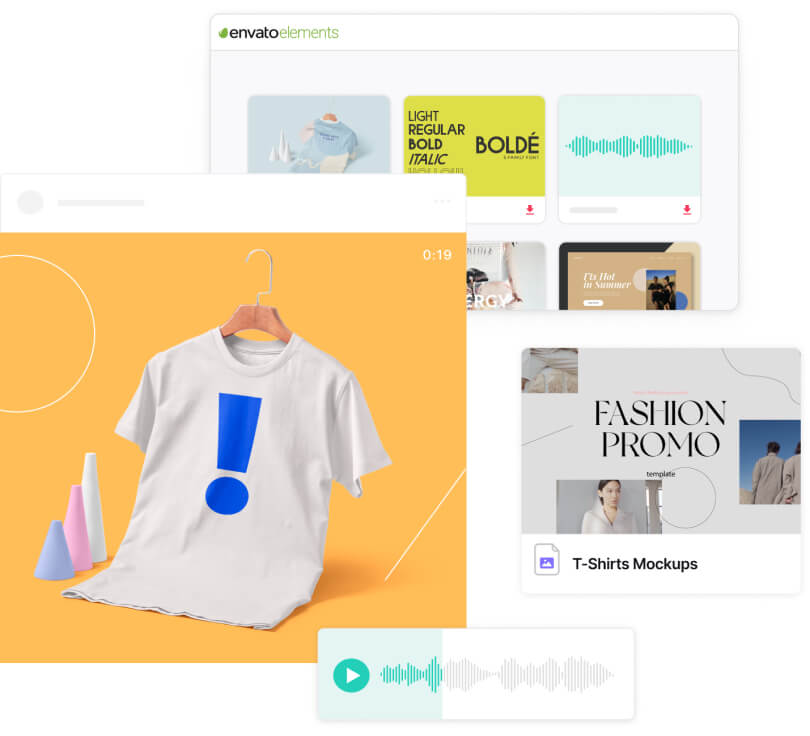
Envato Elements is strongest when a studio has recurring asset demand: decks, video graphics, mockups, web sections, stock, fonts, and social templates. Its license guidance emphasizes broad commercial rights and registering items for use. That makes process important. The subscription is only valuable when the studio uses assets repeatedly and documents each client use correctly.
Creative Market: distinctive creator assets
Creative Market is useful when a designer wants to buy a specific font, graphic set, or template from an independent creator. The benefit is creative variety. The risk is variation: each product should be checked for file quality, license tier, update history, and support expectations before being used in client work.
UI8: UI kit marketplace
UI8 is most relevant for UI kits, dashboard concepts, mobile flows, and startup-style product assets. It can accelerate structure and interaction exploration. It should not replace a product design system or brand logic. Designers should treat UI8 files as starting structure for decisions, then rebuild patterns to match the client.
Adobe Stock: stock and licensed asset workflow
Adobe Stock is strong when a studio needs licensed images, vectors, video, or templates inside an Adobe workflow. Its license terms distinguish standard and enhanced rights, so the buyer should check reproduction volume, premium assets, templates, and editorial-use labels before using material for client delivery.
Figma Community: inspiration and platform-native starting point
Figma Community and official design resources can be useful for learning, exploration, and faster internal setup. Treat them as references unless the license clearly covers client use. Free does not mean responsibility-free; quality, accessibility, and rights still need review.
Buyer Scenarios
Use the shortlist against a real production scenario before buying. A solo designer, a three-person studio, an in-house creative operations team, and a client-side brand manager do not have the same risk. The safest decision names the current project, the person responsible for adoption, the budget owner, the license or support risk, and the exit path if the product stops fitting. If the team cannot name those five things, the product may still be interesting, but the buying decision is early.
For client work, document the source, account owner, license or renewal rule, and files that need to remain accessible after the project closes. That handoff discipline is especially important for fonts, stock assets, templates, hardware warranties, and systems that depend on paid seats.
How to Choose Without Overbuying
Choose volume subscriptions only when the asset pipeline is real. Buy single assets when the project needs one strong kit or type family. Use marketplace assets as structure, not brand identity. Document the asset source, license, client use, and any restrictions in the project handoff so the client is not left guessing later.
The practical rule is simple: buy for the bottleneck you can name, not for a feature list you might use later. If the bottleneck is version confusion, fix review status. If the bottleneck is license uncertainty, fix rights documentation. If the bottleneck is color trust, fix the monitor and calibration process. If the bottleneck is production speed, use templates as a starting structure rather than a finished brand decision.
Internal Reading
For related decisions, read software deal guide, font licensing guide, design system tools, creative brands review. The goal is to connect each purchase to the broader studio system rather than make isolated tool decisions.
Sources Checked
- Envato Elements license
- SideHusl Creative Market review
- Sitejabber Creative Market reviews
- Vendr UI8 buyer guide
- Adobe Stock license terms
- Adobe Stock usage and licensing FAQ
FAQ
Can a brand designer use marketplace templates for clients?
Yes, when the license allows client work and the designer customizes the asset enough to fit the strategy, audience, and final deliverable. The project handoff should record the source, license type, buyer account, edits made, and any restrictions so the client is not left with a file they cannot legally maintain.
Is Envato better than Creative Market?
Envato is usually better for high-volume subscription use when a team needs many assets across decks, mockups, video, and social production. Creative Market is often better for choosing a specific creator-led asset, type family, or visual system. The safer choice depends on project volume, license clarity, and whether the output will look generic.
Are UI kits safe for product design?
They can speed exploration, especially for early flows, stakeholder demos, and rough component coverage. They should not become the final source of truth without rebuilding accessibility states, responsive rules, tokens, interaction details, and brand decisions for the real product. Treat a UI kit as scaffolding, not a finished product system.
What is the biggest marketplace risk?
The biggest risk is shipping a recognizable asset without confirming rights, editability, or brand fit. A template can save time during exploration, but it can also create sameness, license confusion, and weak ownership. Before buying, check whether the client can receive, edit, publish, and reuse the asset under the license.
Studio Implementation Notes
For marketplace assets, originality comes from editorial restraint. A template can provide grid structure, interaction ideas, deck flow, or production speed, but the studio should replace generic typography, spacing, color logic, icon style, imagery, and copy hierarchy before client delivery. Keep a record of which marketplace asset influenced the work and what license covered it. For high-visibility brand projects, avoid using marketplace visuals as the main identity signal. Use them for internal acceleration, then rebuild the visible design language around the client’s strategy and audience.
Final Studio Decision Check
Marketplace workflow should also include an originality review before delivery. After the asset is customized, step back and ask which visible parts still come from the marketplace: layout rhythm, icon style, illustration treatment, mockup composition, typography, or section structure. The more visible those parts remain, the more the work risks feeling generic or duplicated across clients. For internal wireframes and production acceleration, that may be acceptable. For public brand identity, it usually is not. Keep the useful structure, then rebuild the signature decisions around the client audience, content, and market position. A marketplace should help the studio move faster toward original work, not provide a shortcut around original thinking.
Production Proof Before Purchase
A final pre-purchase check should include one real project artifact. For software, use a live component, proof, template, font, or asset instead of a theoretical example. For hardware, place the device in the actual desk setup and confirm cable reach, lighting, ergonomics, warranty, and support path. For marketplaces and licenses, record the exact source, permitted use, account owner, and handoff note. This practical check keeps the decision grounded in production rather than preference. It also gives the studio a reusable audit trail if the client asks why the product was chosen later.
Decision Record
One more safeguard is to write the decision in plain language before purchase: what problem is being solved, what evidence supports the choice, who maintains the tool or asset, what would make the team replace it, and which source should be checked when terms change. That note is small, but it prevents future readers from mistaking a dated preference for a current recommendation.